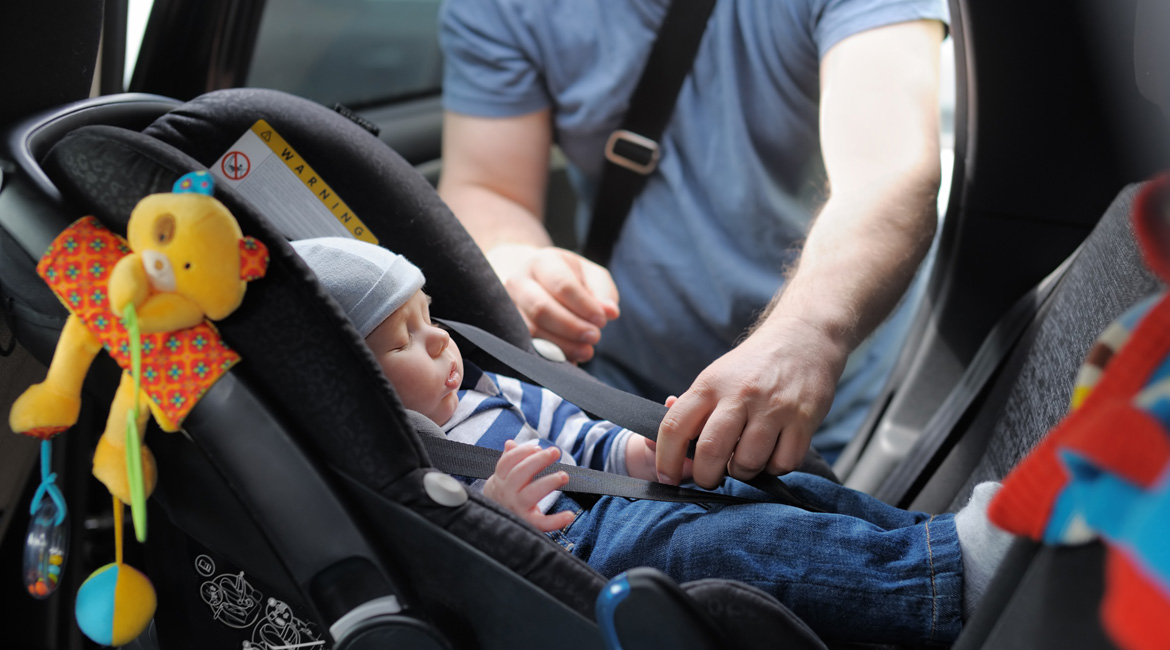
Car seats – everything you need to know about the safety of children in traffic
The safety of children in traffic and the prevention of potentially dangerous conditions should be put above all else when we know that traffic accidents are the most common external cause of death among children of all age groups (2019 publication of the Croatian Institute of Public Health).
What can we do for the safety of children in traffic?
Prevention is the golden rule.
it is mandatory to fasten the child in the car seat in the back seat
children aged three years and older, and shorter than 150 cm, may not be placed in the front seat
they can ride in the back seats without a safety seat when they are at least 135 cm tall, properly fastened with an adult safety belt
(Act on Traffic Safety on Croatian Roads, Article 163)
The car seat must be tested, checked and certified (according to the safety certificate of Regulation 44 of the United Nations Economic Commission for Europe (UN ECE R44)). Properly mounted, it should not move more than 2 cm forward, left and right.
What types of car seats are there?
car cot (for babies lighter than 3 kg)
car seat adjusted backwards (up to 1 year of age or body weight up to 9 kg)
combined car seat (for mounting backwards and forwards)
forward-mounted car seat with child booster (seat-pad) – after 1 year of life and body weight between 9-18 kg (some models up to 27 kg)
children’s booster – for children weighing at least 18 kg and 100 cm or more tall, up to 8 years of age or 135 cm tall
What about the belt?
There are two belt systems: a belt with three points of contact (exclusively for rear-facing car seats – one on each shoulder and one in the groin) and a belt with five points of contact (one each on the shoulders, thighs and groin).
How to properly install the car seat in the car?
Using the ISOFIX system, which directly secures the car seat to the car, without using a car seat belt, and it must be compatible with the vehicle.
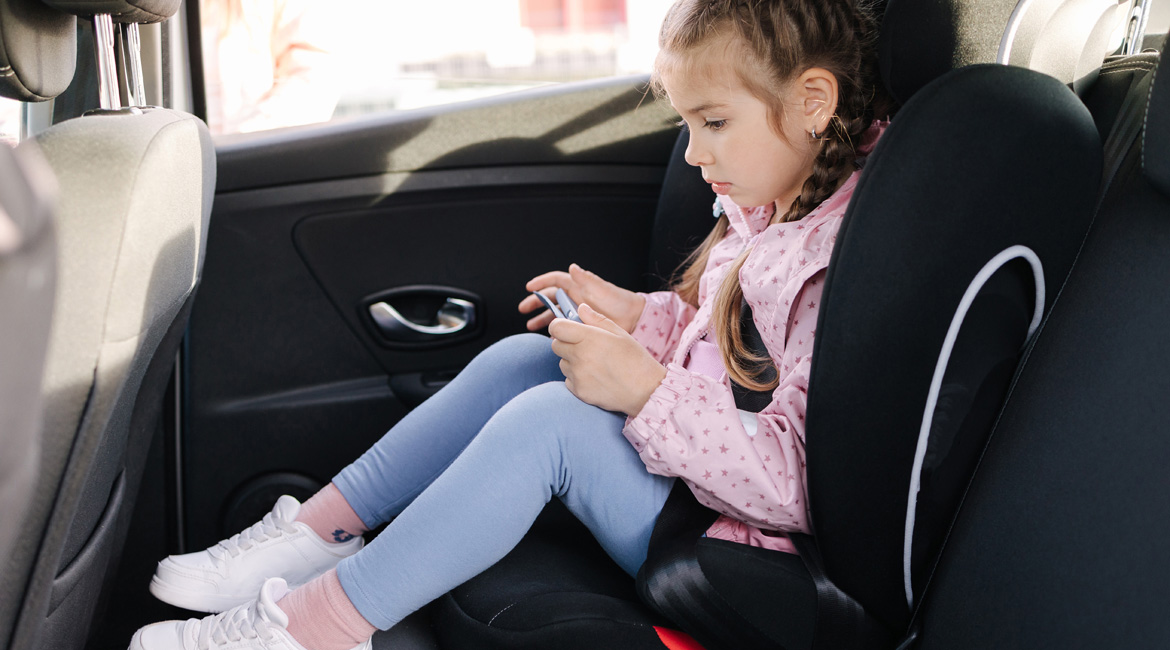
What is the correct position of the car seat in the vehicle and of the child in the car seat?
The best position is on the back seat in the middle. For an infant, choose a semi-sitting position with an inclination of about 45 degrees in a seat installed opposite to the direction of travel. An exception is allowed for premature infants and newborns with a body weight of up to 3 kg, in which a car cot can be used so that the child is laid parallel to the backrest of the rear seat, with the head in the middle of the seat (due to the risk of slipping out in the event of a side impact).
When can a child ride facing forward?
When the child can stand up without help, with compliance, but the recommendation is to use rear-facing seats for as long as possible, even up to the age of 3. Namely, during a potential collision, the head flies forward and the cervical spinal cord is stretched or injured. Such seats for older children are somewhat more expensive.
How to recognize that a child has outgrown the car seat?
When the top of the child’s head reaches up to 2.5 cm below the top of the car seat-back, i.e. if the child’s ears are in line with the top of the car seat-back.